
Universities, like other institutions, are currently being confronted with a dilemma: embrace the AI tools currently available from big-name tech companies, and be part of the future, or reject the miraculous machines and stick your head in the sand. This dilemma is a false one, on several counts. It is far from clear what role generative AI will have in the future of academic life, for one thing. And beyond rewording the choices, surely there are other options that this dilemma fails to consider.
Here, I will outline one possible means by which academic institutions could unsettle the dilemma they currently face: the formation of a university-owned-and-governed AI infrastructure. It would aim to provide:
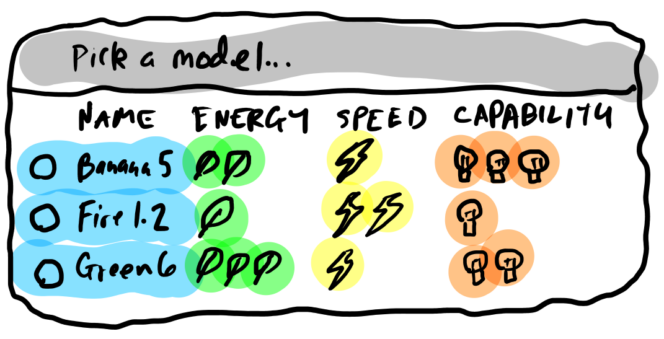
- Access to diverse, open-weights AI models running on renewable energy
- Education-appropriate defaults designed to support learning
- Interfaces that promote user choice rather than corporate lock-in
- Data protection for institutions and users
- Opportunities for participation in building and governance
This proposal assumes, for the sake of argument, that generative AI tools are actually going to be useful in academic settings. I recognize that is itself widely contested. But it is hard to deny that, when I look across a cafe or study room on my own campus, many student laptops have open a big-tech chatbot. I have also found some academic uses myself, such as coding software prototypes, interview transcription, and supervised data analysis. But if it is true that the academic endeavor would be better off if generative AI were marginal or nonexistent, the proposal here is unnecessary.
Whatever its fate, I regard the rise of generative AI as a teachable moment. When we hand our relationship to this technology over to big tech, we are teaching our students that this is the responsible thing to do. Alternatively, this is a chance to teach students that technology can be a site of creativity and diversity. It is also a moment for academia to demonstrate how it is a distinctive and necessary part of society, capable of enacting forms of practice not otherwise available.
The problem
The troubles with the current academic contracts for generative AI are becoming increasingly apparent. The interests of academic institutions and corporate AI providers are meaningfully divergent. I will briefly review a few reasons, though this is only a cursory glance at a rapidly growing literature.
Universities exist to teach people and learn new knowledge, while corporate AI seeks to automate people by replacing knowledge with magic. There is already strong evidence that AI reliance inhibits human understanding. Tech companies want their tools to be perceived as being essential and irreplaceable. Their biggest clients are executives itching to fire workers and replace them with AI agents. This is precisely the opposite of what universities are for.
Universities should be committed to protecting their communities. But existing contracts with AI companies include some troubling clauses for data governance and accountability. These companies have every incentive to gather and utilize users’ data, whether to train their models or sell ads, and the data of young people is especially valuable. The contractual assurances that the companies will protect academic inputs have been dubious, and they are counter to the companies’ underlying incentives.
Universities should be on the forefront of environmental stewardship. But big tech companies have been rushing to discard climate commitments for the sake of data centers, and AI contracts threaten to undermine campus environmental goals. These contracts outsource climate stewardship to companies with little interest in it, and in the process they rob campus communities of the chance to determine which choices and compromises are right for them.
Universities are sites of habit formation. We welcome students at a time in their lives when they are making decisions that they will carry with them for decades. This is why AI companies want to make deals with us—to win loyal future customers. But it is our responsibility to help shape student habits responsibly, teaching them to be critical and thoughtful participants in a complex world. Delivering them into the hands of a tech monopoly is an abdication of that responsibility.
Each of these problems may very well be a reason to run in the opposite direction of generative AI altogether. But there are also ways to meaningfully mitigate them.
The potential
AI usually appears to most people as a single, integrated product; you’re talking to ChatGPT, or to Claude. Universities probably can’t compete with some of the biggest companies in the world. But actually these products are amalgams of pieces that can be thought of as a stack, with distinct layers. There is the underlying data, the models, the fine-tuning, the inference hosting, the routers, the harnesses, and the open protocols that weave it all together. When you focus on particular layers of the stack that matter most, creating a competitive service starts to seem more plausible.
In particular, this proposal evades the most expensive and energy-intensive part of the process: pre-training foundational models. (But hey, Swiss universities did it!) By focusing on the last-mile work of inference and interface, it is possible to access AI services without massive capital investment.
Currently, very formidable open-weights models are freely available, and they are often just months behind the abilities of the “frontier” models. They also can be much more resource-efficient to use. While big tech companies compete with each other to provide the most cutting-edge and expensive models, open-weights models will suffice for the vast majority of student and research use-cases. Today, many of these come from Chinese and European labs, though they can be used without sending any data to those companies’ servers.
Further, there is now a very well-developed ecosystem of open protocols and open-source software for AI inference and interface. This means that universities can build on and contribute to a non-commercial commons without having to create everything from scratch.
These conditions, together, amount to an opportunity for establishing AI infrastructures that reflect academic values and needs, and that invite our students to approach these tools more critically and creatively than corporate platforms allow.
The strategy
What I am proposing here is the formation of a cooperative among universities that provides generative AI services in a manner that is appropriate for academic settings.
While we may disagree about the ethics, usefulness, and future of generative AI, this approach allows us to hold space for those questions rather than burying them under a bad contract with a company whose interests are orthogonal to ours.
Governance
A cooperative organization would enable universities to pool their resources while retaining a voice in the management of the shared infrastructure. The closest parallel I’m aware of is the academic library cooperative OCLC, though its governance leaves much to be desired. Typically, in a cooperative, the members of the governing board are elected by the co-op’s members—in this case, the academic institutions that pay to use it. That board hires the management team that runs the co-op day-to-day. I expect this would be a non-profit cooperative, meaning that its purpose is to provide services at cost rather than to distribute profits to members.
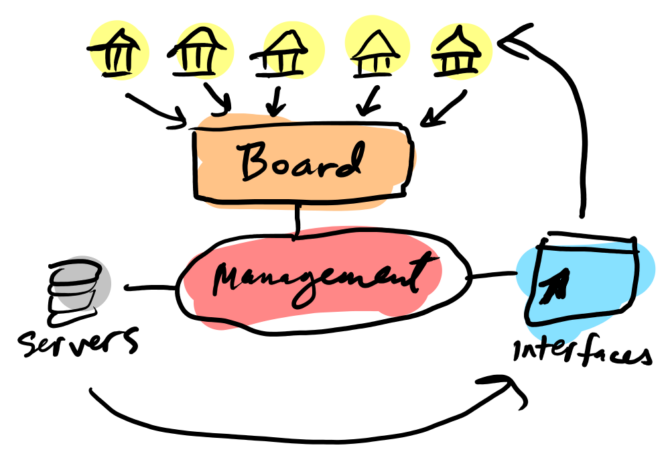
The cooperative should also allow for significant customization at the campus level. Questions like model availability and system prompts could be decided by campus IT teams, students, and faculty.
It is possible to imagine running all these services just at the campus level, but this proposal assumes that doing so would be beyond the capacity of most campus IT teams, so a more federated strategy would be more inclusive.
Inference
The primary job of the cooperative is to provide access to AI models running on shared servers. It should host a wide variety of models, enabling users to make choices about which model to use, and to learn the differences in behavior among different models. The service could also support automatic routing to match any given query to the most resource-efficient model capable of addressing it well.
Ideally, the cooperative would choose to run the servers as much as possible on renewable energy, in locations where they do not pose a burden on local communities. These are decisions that would be up to the cooperative’s leadership.
A further question is how to steward user data. It is possible to deploy models in a way that protects even server administrators from accessing the interaction data. This may be preferable. Alternatively, institutions may decide that being able to audit user data is necessary to enforce academic honesty standards or prevent misuse.
Interfaces
The dominant interface for corporate AI contracts is browser-based chat. But that is only one way of interacting with generative models. The cooperative can use existing open-source tools to provide a variety of interfaces, such as hosted agents with downloadable storage and APIs for connecting models with diverse apps. Perhaps the starting point could be a hosted agent service that users can connect with other campus data and resources.
The cooperative, and individual campuses, could design system prompts that encourage models to teach rather than just produce. By default, especially with student users, these tools could encourage step-by-step understanding of processes rather than “one shot” prompting. A “show-your-work” mode could enable user students to easily export their process for documentation purposes.
Users should always be able to export their data, and since the system is based on open-source tools, users should be able to migrate it to non-university systems.
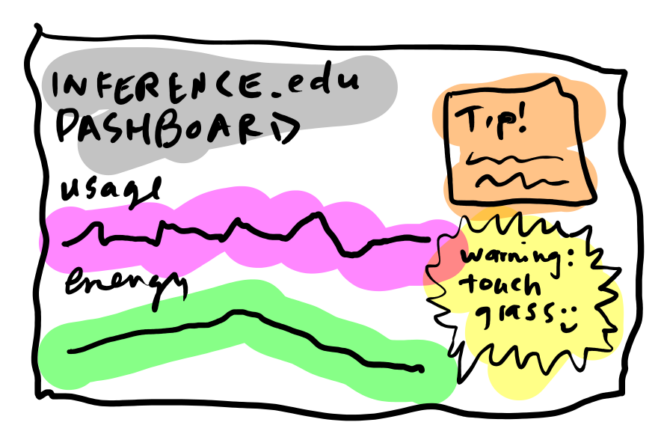
Regardless of the interfaces they choose, users should be able to access dashboards that help them be more informed about the tradeoffs involved in generative AI. For instance, dashboards should show performance statistics of various available models. Environmental impact data should include individual and campus-level usage, as well as external impacts from model pre-training and hardware production. Dashboards might also surface evidence of over-dependence on generative AI and nudge users to explore other activities.
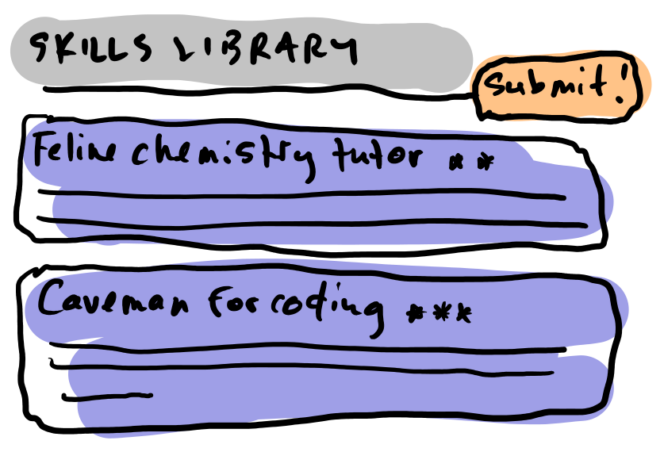
Finally, the interface could include a library of user-contributed skills, plugins, and other resources. This would invite students to customize their experience and share their customizations with each other—reinforcing the experience that AI is a flexible and malleable ecosystem, not a corporate monolith.
Oversight
Any academic practice that involves risk of abuse should be subject to oversight, and generative AI is no exception. The cooperative should support campuses in establishing norms and enforcing them.
For instance, the cooperative could support institutional review boards and related programs in making sure their protocols are being followed in research workflows. Researchers at member institutions could collaborate to establish clear, shared expectations for responsible AI-augmented research. The cooperative could also support honor code offices with shared standards, as well as by helping students demonstrate that their work complies with stated rules.
Deployment
Is this proposal really feasible? I have been exploring inference-focused business models such as GreenPT, Confer.to, and Ollama; it appears quite possible for inference services to match the cost of the investor-subsidized pricing of the big AI providers. I have had AI tools generate, but cannot fully stand behind, financial models for this proposal that are at or below the per-user cost of the recent university deals with Anthropic and OpenAI. I have advised countless cooperative startups, including some AI-focused ones, and I co-founded the only national accelerator for ambitious new co-ops; to me, this idea passes the smell test.
The cooperative could develop in stages. Early on, it could run on rented server capacity, using a commercial cloud provider—ideally one committed to using renewable energy. This way, the cost could grow in step with the usage. As more institutions join and usage projections stabilize, the co-op could own its own data centers. The co-op might also enable a more federated model, where universities could run their own data centers and share their resources with the co-op’s network.
Owning our compromises
This proposal does not assume that generative AI is the key to the future, as some claim, or that it is a categorical threat to the academic enterprise. Rather, it is an attempt to make space for options in between.
In order to explore those options, we as an academic community should be able to make our own choices and understand the tradeoffs involved in them. Our students should be able to learn that the technologies they use need not always come from corporate giants. If generative AI is really the transformative moment that the companies selling it say it is, academic institutions should be prepared to enter that transformation on their own terms.
Addendum: Feedback and future work
I’ve been grateful for the feedback and discussion that this post has generated. This is an ongoing collection of points others have raised for further developing, adjusting, or critiquing the idea.
Student voice from the start
The proposal doesn’t go into a lot of detail about the role of student voice, but this is really important. Many university students have been vocal about rejecting their elders’ assumptions about AI’s future role in society, while at the same time they have often been at the forefront of adopting these tools in their coursework. An academic inference cooperative should involve not just student input but strong avenues for student voice. This is important both as a pedagogical practice and to ensure that the cooperative avoids the pitfalls of imposing tools as devised by more powerful administrators into the lives of those with less power but more at stake.
An inference cooperative should have board-level student representation from the beginning—student representatives who are chosen by students, not simply those who reflect back the views of administrators. This is in addition to the role of students in participating in creating interfaces and other aspects of the system.
Federation layers
The above proposal is not very clear about which roles would be held by the co-op consortium and which would be handled at the campus level. This is obviously of major concern to campus IT staffs, which are already over-extended in their responsibilities. Here is a potential breakdown:
Cooperative-level:
- Large-scale inference infrastructure
- Responsibility for innovation and upgrades
- Sharing best practices
- Accessibility tooling
- Liability management
Campus-level:
- Limited-scale local inference
- Policies and system prompts
- Branding and culture
- User-generated agent library
Liability for model behavior
An important concern about this strategy is that it means risks absorbing liability for AI behavior. LLMs are notorious for factual errors, sycophantic interactions, and problematic mental health impacts—to the point of, in some cases, encouraging suicide. An academic inference cooperative could take extra pains to keep models away from these kinds of behaviors. But LLMs are nondeterministic machines, and there is no way to guarantee guardrails. Legal and moral liability are thus important concerns. They might also be serious enough to justify externalizing liability to a third-party company—although that is merely a delegation of accountability.
Arguably, if academic institutions are to support LLM-based tools in any form, they should address the responsibility for model behavior on their own terms. And a cooperative of multiple institutions may be better equipped to confront this challenge than individual universities. In any case, the cooperative should take care to establish expectations around liability and take extra pains to provide tools that are significantly safer than the norm.
One way of addressing the challenge of liability is to strongly gate access to the inference cooperative, so that only approved uses are possible. For instance, a user might need to gain permission for a particular use-case, akin to an IRB process. This would have the disadvantage of not supporting the kind of casual usage of LLMs that has become an increasingly common part of many people’s lives. But perhaps a narrower remit is necessary to ensure that the cooperative’s services are sufficiently safe.
Permissioned access for researchers
Another approach to permissioning is around usage data. The dominant AI platforms retain their usage data as a proprietary asset, and it is not available to most researchers. The inference cooperative might also double as a research platform, enabling researchers at participating institutions to apply for access to anonymized user data. Enabling this kind of access might also be a revenue source for the cooperative. Approved projects would have to demonstrate high standards of public benefit and privacy protection.