This is an apology, because I have done something I never had any intention of doing, and that would appall me if I learned a friend had done it: I have founded an AI startup. Like any half-hearted apology, I’ll now attempt some self-justification. I’ll try to explain how I got here, and why being sorry about the optics does not mean I’m actually sorry for what I’ve done.
For a while I was trying to ignore AI with the best of them. It’s not allowed in my college classes so far, and I enjoy writing too much to let computers do that part of my job. It has been hard enough to wrap my head around previous iterations of tech disruption, like the gig economy and cryptocurrencies, so I would have been happy to skip out on yet another one.
But this particular hype-wave wouldn’t go away. My university foolishly bought into a big ChatGPT contract with nearly zero consultation, right after chatbots had pushed all of academia into a vocational crisis. Meanwhile, I started finding a handful of useful things to do with AI models, from research assistance to managing my family’s printer. And when I encounter useful tech backed by exploitative business models, I can’t help trying to figure out if a better way is possible. I’ve tried this already with word processing, social media, blockchains, and tech platforms in general.
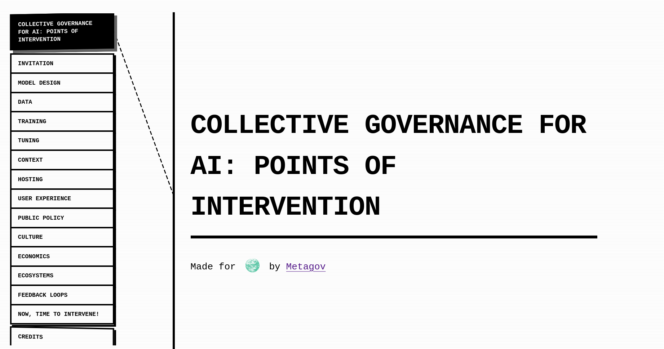
Meanwhile, I was learning what I could. Over at Metagov, an online governance research network I co-lead, we did a collective process to identify “points of intervention” for democratizing AI. One opportunity especially stuck out at me: inference. It’s the moment where the user queries the model and gets a reply. And it’s a commodity; the cost of doing it is in proportion to the amount of use. No big upfront capital is needed, even while there are benefits in economies of scale. Ding! You can cooperativize stuff like that.
I spent last summer exploring. On a little Raspberry Pi computer in my home office, I ran agents on various inference providers already out there. Some offered renewable energy. Some offered privacy. I couldn’t get everything I wanted in one place. Traveling the high road took a lot of work. I started imagining ways that it could be easier.
Meanwhile, I advised the founders of the Public AI Inference Utility, a consumer co-op providing Switzerland’s sovereign models. I started circulating a proposal for an inference cooperative among US academic institutions. It was a large-scale thing, and I couldn’t do it on my own. Those conversations are still going on. But I was getting impatient. I joined Trebor Scholz’s “AI Without Bosses” course and wanted a self-assigned project.
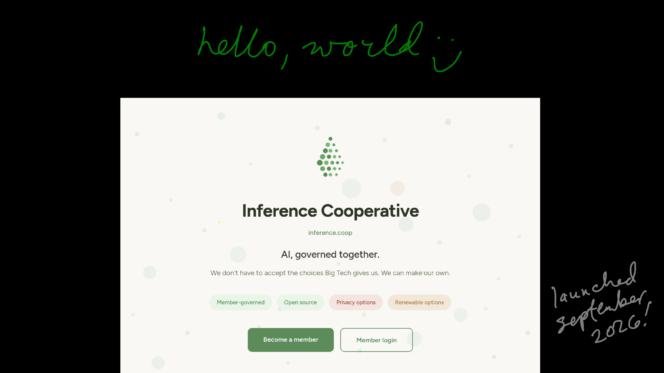
In late September, I went to the official domain registrar for the cooperative movement, domains.coop, and registered inference.coop. The .coop top-level domain is one of the oldest in existence, and the team behind it really does check that you’re a real co-op, or at least trying to be. The thing I had started calling the Inference Cooperative passed the test. Legally, it is fiscally sponsored by Metagov, a nonprofit, but functionally it is fully member-governed.
To get the thing going, I relied on two sources of knowledge. One is the experience of running self-hosted software for the students in my lab for many years. I’ve learned a lot about designing a fairly usable integration of diverse, open-source tools. Second, I had help from InferenceBot, a collaborator running on various open-weights models through Hermes Agent, an open-source harness that learns skills as you work with it. InferenceBot built the increasingly functional digital duct tape that connects our collection of already-built tools.
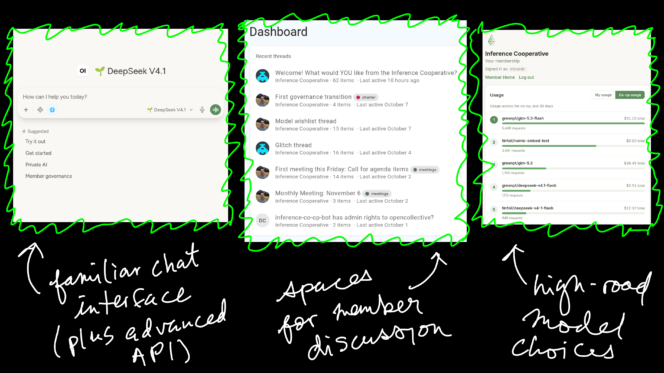
Within a day or two, a basic ChatGPT facsimile was up and running. That’s all it took to replicate the app of a trillion-dollar company! I invited friends and students for some early testing and fixing. Then I started posting about it online, and more people started finding it. Many of them seemed to find it useful, and they kept telling me when something broke. We patched glitch after glitch. We switched out the chat app for another and added more models and model providers—take your pick, maximal privacy or maximal green energy. Now, the agents helping to build the co-op are running on the co-op itself.
At first, I drafted a preliminary charter that gave me all the power, but it required that to change at 50 members. We got there in about a month, and then agreed to a new charter. It gives members the power adopt binding policies and fire me as general manager. They haven’t yet, but they could.
The feeling that this thing actually works has been sort of thrilling. I use the tools we provide every day. And members say they’re enjoying it too. Members are building apps with it and using it to help them navigate government bureaucracies. When they run intro trouble, they suggest improvements and contribute code. Some are cybersecurity experts. Some are more focused on art, design, and community-building.
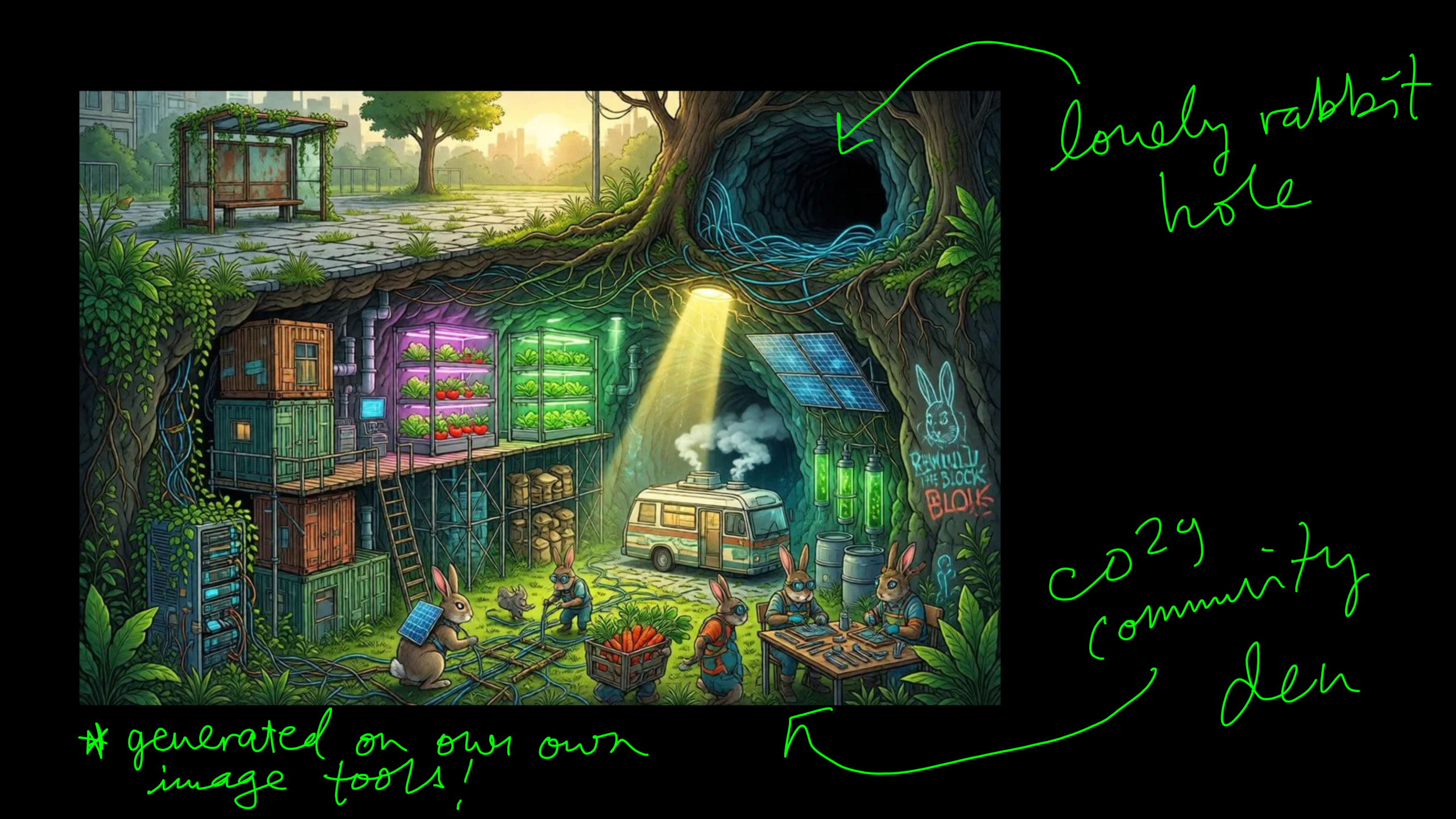
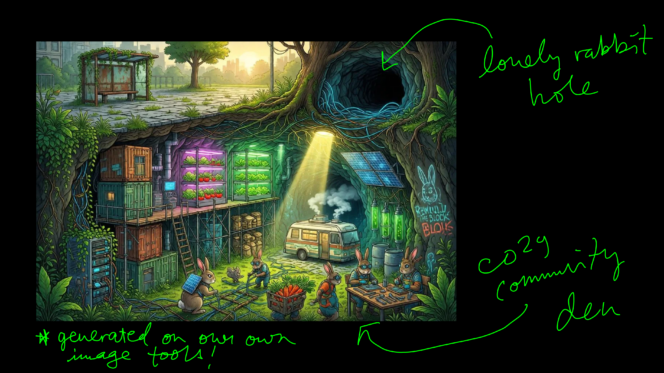
As the Inference Cooperative grows slowly (thank goodness), the experience of AI has changed for me and for many of us. What once felt like a rabbit hole of lonely AI experiments, always a bit at risk of that fabled psychosis, has become a warm den. The technology brings us together rather than driving us apart. We can share our experience and learnings in our chat channels, and we meet over video calls. We are only a couple of months in, but I can see in those beginnings the glimpses of much more.
It reminds me of a great story by Cadwell Turnbull from years ago, about an AI in the Virgin Islands that is actually trustworthy because of its democracy. Finally, I am starting to know what its characters felt. It is almost surprising to have that feeling—that perhaps, after all, we don’t always have to hate this technology.
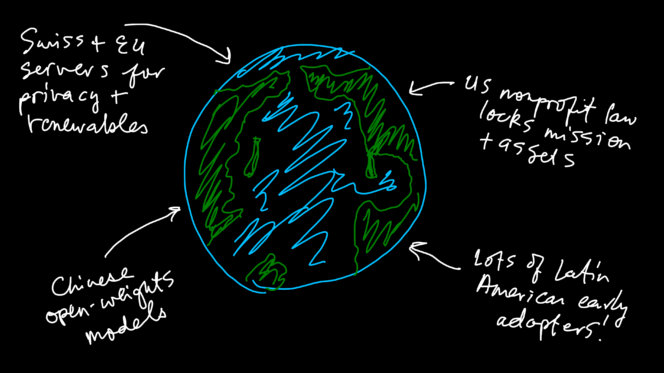
There is also a geopolitical play at work here. The usual story is that AI is all about a race between the US and China, with Europe somewhere in between, and resources stolen from across the Global South. Our story is quite different. We use the locks on capital and mission from US nonprofit law; the green energy and privacy protections of Swiss servers and EU inference providers; and Chinese open-weights models. I hope that someday we will offer models that specialize in less-resourced languages and use-cases, and that serve the needs of people farthest from the centers of power.
We have not made AI perfect, by any means. The models we use are still stained by stolen data and dirty energy. As our purchasing power and expertise grows, we’ll be able to raise the bar on what we offer.
Meanwhile, I have also experienced firsthand the intensification that workplace data already reveals: AI tools risk shrinking our leisure time rather than enlarging it. Because I can do so much with the support of agents, there are so many more things I feel I should be doing, and I can start checking on them constantly. Our priority now is to make sure the heart of this co-op is a mutually trusting team of people, not a ventriloquism of machines. Thankfully, the members are helping us get there.
This month, for instance, a member named Angel stepped forward to create a survey for fellow members, then shared the results at the next meeting. Ed identified a strategy for tracking our energy-use data. Isabela has been organizing skill-share events to highlight what members are doing with our tools. On day-one in the co-op, Casey wrote the code to add a useful button to our interface.
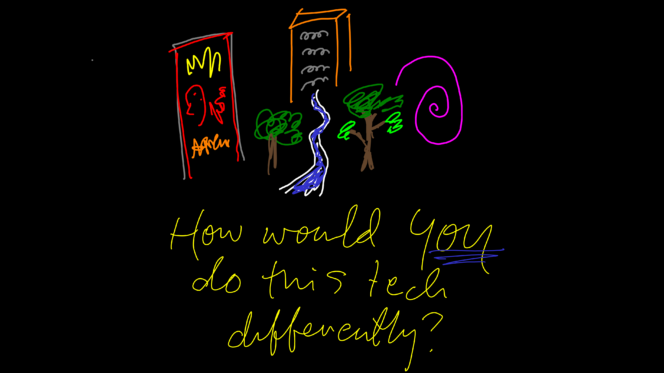
I got this started with a theory that healthier governance of AI could enable healthier uses of it. The theory was at least alluring enough to induce me to try. But the practice and the people I have found through it have proven far more wonderful than the contraptions we’re working on together. May many more of these geothermal dens burrow away the foundations of the data centers, and bankrupt the hyperscalers’ lie that only they can shape the future.
So, yeah, I guess I’m not really sorry at all.